Rapid response production thanks to flexible automation
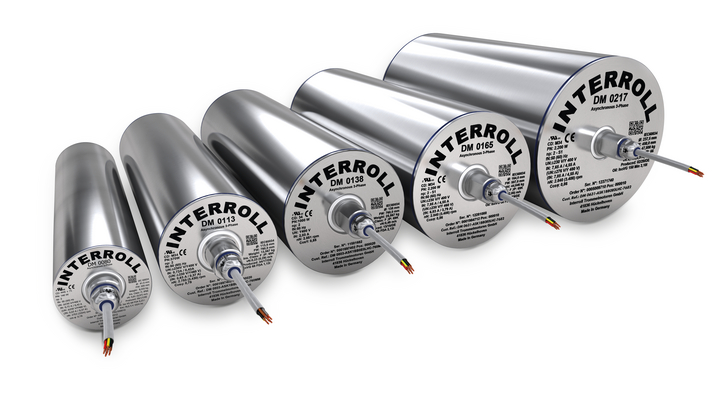
Founded in 1959, the Swiss Interroll Group is a leading global provider of material flow solutions. Its customers include industry giants from the food industry, online retail and other sectors – including Amazon, Procter & Gamble, Bosch and Nestlé. Within the Group, Interroll Trommelmotoren GmbH from Hückelhoven is a manufacturer of roller and drum motors.

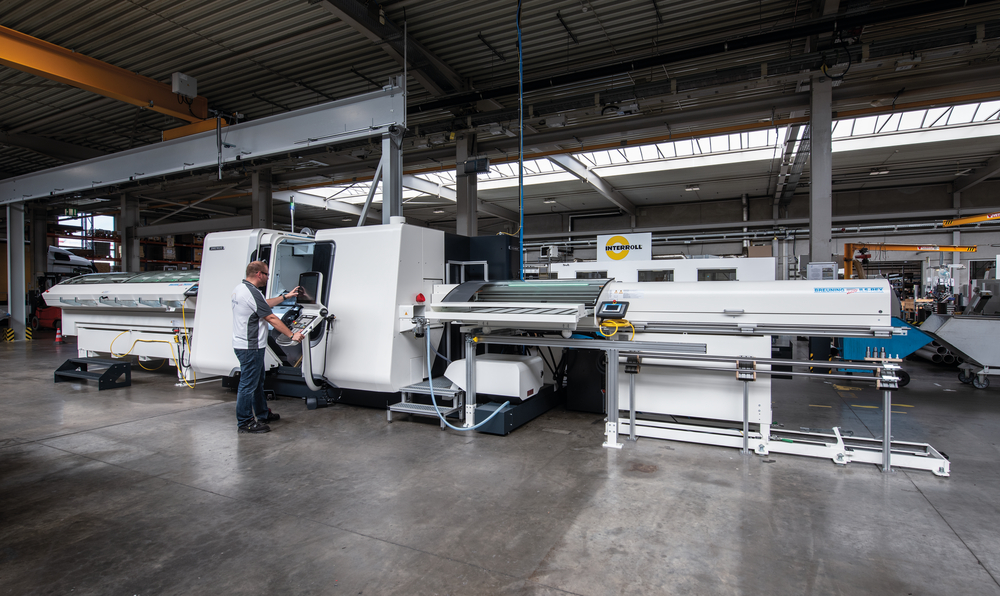
Development is carried out jointly with Interroll Innovation GmbH. The company was integrated into the Group in 2006 and employs 211 specialists. To ensure the reliability of the customer's material flow and minimize downtime, the drum motors are produced and delivered within five days – or even within 24 hours for special service offers. However, this requires highly productive manufacturing. Interroll has been relying on automated production solutions from DMG MORI since 2018. Following delivery of a cell with two CTX beta 1250 4A lathes and robotic automation, a CTX beta 800 4A with bar loader and automatic parts removal was installed in 2024.
Individual motors within within 5 days
”Continuous material flow is the backbone of numerous applications in logistics and industry,“ says Thomas Baack, Managing Director of Interroll Trommelmotoren GmbH, explaining the need for reliable motors in a wide variety of designs. Size, performance, temperature resistance and hygienic design are individual factors that lead to a wide range of products. After all, material can flow anywhere – in the production and packaging of food, in industrial assembly line production, in baggage handling at the airport or in the handling of large pallets. ”Unscheduled downtime is a serious problem in any of these areas because it costs time and money.“
Interroll promises its customers delivery of motors within five days. A modular product platform makes this possible. The motors can be configured to meet individual requirements. According to Alexander Leven, who is responsible for industrial engineering, this poses major challenges in production: ”We have to plan our capacity and orders in such a way that we can manufacture the individual components flexibly before the motors are assembled and tested.“
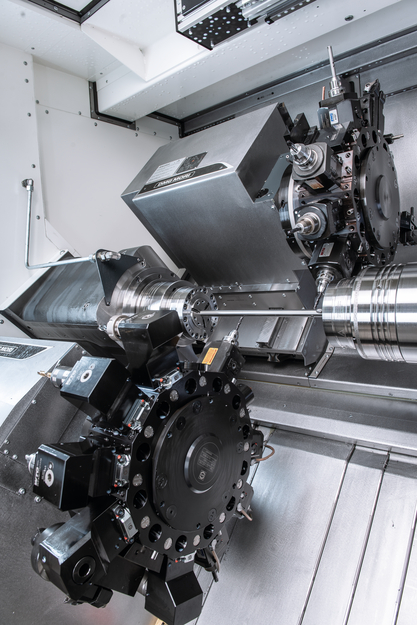
As the drive of drum motors is located inside the units, they take up less space than conventional motors and therefore help to optimize the installation area. In addition, drum motors score points with their hygienic design, which meets the strict requirements of the food and pharmaceutical industries. Their smooth surfaces and enclosed design prevent the ingress of dirt and make cleaning much easier, thus meeting the highest hygiene standards. The aluminum, steel and stainless steel components have been manufactured on DMG MORI lathes since 2006. They process the small batch sizes reliably, with high precision and in short throughput times. “The CTX beta 800 4A in particular with two spindles and two turrets is highly flexible thanks to 6-sided complete machining,“ explains Alexander Leven. ”We can either perform two successive operations on one component at the spindles or machine two workpieces at the same time.”

Automated production since 2018
In the past, manual activities such as clamping and removing the workpieces accounted for a relatively large proportion of what was actually a short machining process. Automated handling was therefore the logical consequence. Alexander Leven, who designs such production solutions together with his colleagues André Honigs and Mehmet Özcan, remembers the first autonomous production cell: “In 2018, DMG MORI installed two CTX beta 1250 4A lathes, which are loaded and unloaded by a robot.” Such solutions are a huge benefit. “Employees have more time for preparatory tasks and quality control.”
Flexible & automated turn-mill processing of bar stock
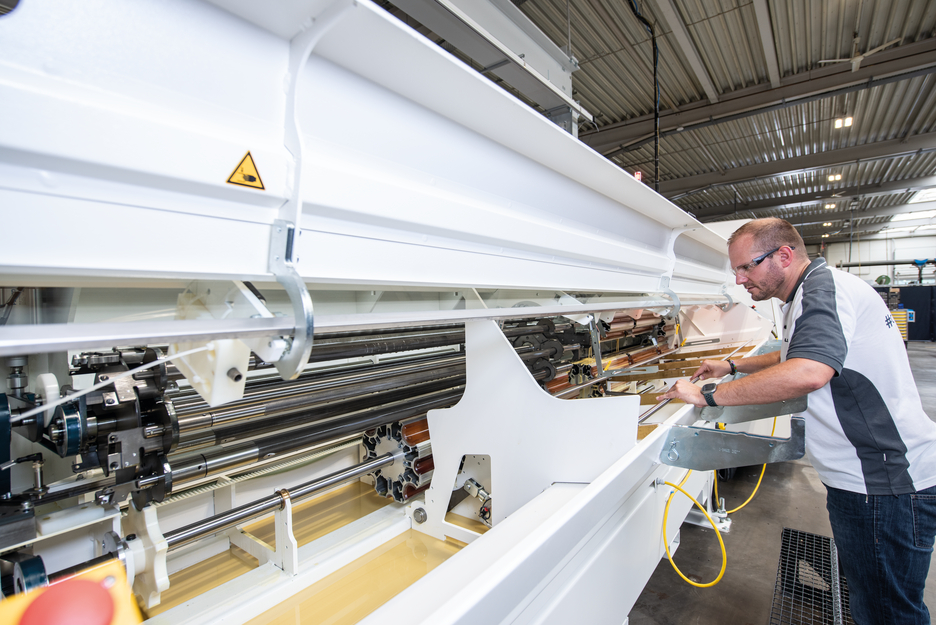
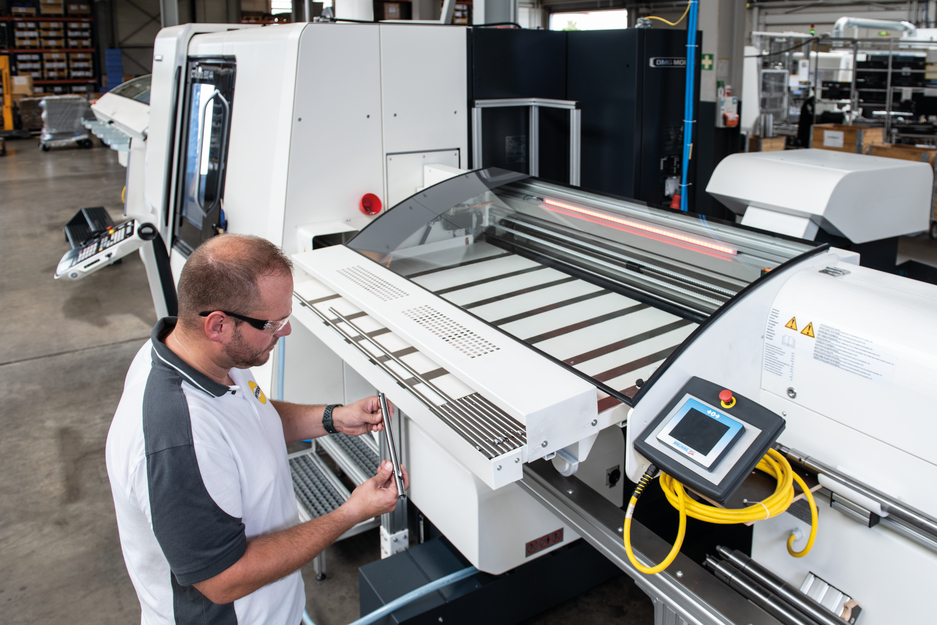
While the first automated production cell is loaded by a robot, the CTX beta 800 4A installed in 2024 processes bar material up to 1,600 mm in length – also fully automatically. The large variety of parts can be manufactured due to the provision of bar magazines with eight guide channels, allowing bars of different diameter to be selected depending on the order.
Short components are removed using a gripper in the machining area and a parts dispenser. Longer workpieces are output by the right hand spindle and picked up by an unloading system. Communication between loading and unloading ensures that the bar material is used optimally and in a resource-saving manner.
Complete machining including in-process measurement and marking
In addition to turning and milling operations, the 6-sided machining of the motor components includes engraving of the workpieces and in-process measurements to relieve the burden on quality control. The digital networking of the CTX beta 800 4A also makes programming easier. As there are numerous variants of a component, only a few parameters such as the length and diameter need to be changed. The control system obtains this data from the company's SAP system. In this way, orders can be prioritized even faster at short notice.
Labor shortage promotes automation solutions
Thomas Baack sees future development as economically positive. “The shortage of labor will further promote the automation of material flows and thus the demand for our solutions.” The product portfolio is ideally positioned for further growth. The same applies to motor production, as Alexander Leven adds – also with a view to future lathes from DMG MORI: ”The high level of flexibility in production and consistent automation, including for new machine acquisitions, will further strengthen our competitiveness.“


Interroll Trommelmotoren GmbH
Opelstraße 3
41836 Hückelhoven, Deutschland
www.interroll.com